News
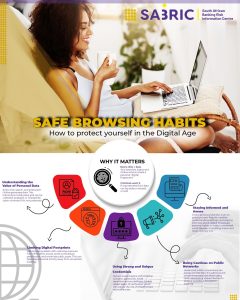
Safe Browsing Habits
Publication Date: 13/11/2025

How to Protect Yourself in the Digital Age
Why It Matters
Every click = data.
Your searches, logins, and online actions create a personal digital fingerprint — and cybercriminals want it.
If your data isn’t protected, it can be stolen, misused, or sold.
Understanding the Value of Personal Data
- Every search, click, and online interaction generates information about you.
- This data can be collected, analysed, or exploited by cybercriminals if left unprotected.
Limiting Your Digital Footprint
- Safe browsing reduces your exposure online.
- Turn off location services when not needed
- Avoid granting unnecessary app permissions
- Limit public posts and oversharing
- These measures minimise unwanted tracking and protect your private activity.
Using Strong and Unique Credentials
- Account security starts with strong passwords.
- Create complex, unique passwords
- Never reuse passwords across platforms
- Enable multi-factor authentication (MFA/2FA)
- These steps significantly reduce the risk of unauthorised access.
Being Cautious on Public Networks
- Public or unsecured Wi-Fi can expose your private data.
- Avoid accessing sensitive accounts
- Don’t make financial transactions on open networks
- Be careful when using shared or public devices
- This helps prevent data interception or session hijacking.
Staying Informed and Aware
- Online privacy is an ongoing process.
- Keep your devices and apps updated
- Review your privacy and security settings regularly
- Stay informed about new threats and scams
- Beware of phishing — never click suspicious links