
News
2025 Budget Speech Statement
Publication Date: 13/03/2025
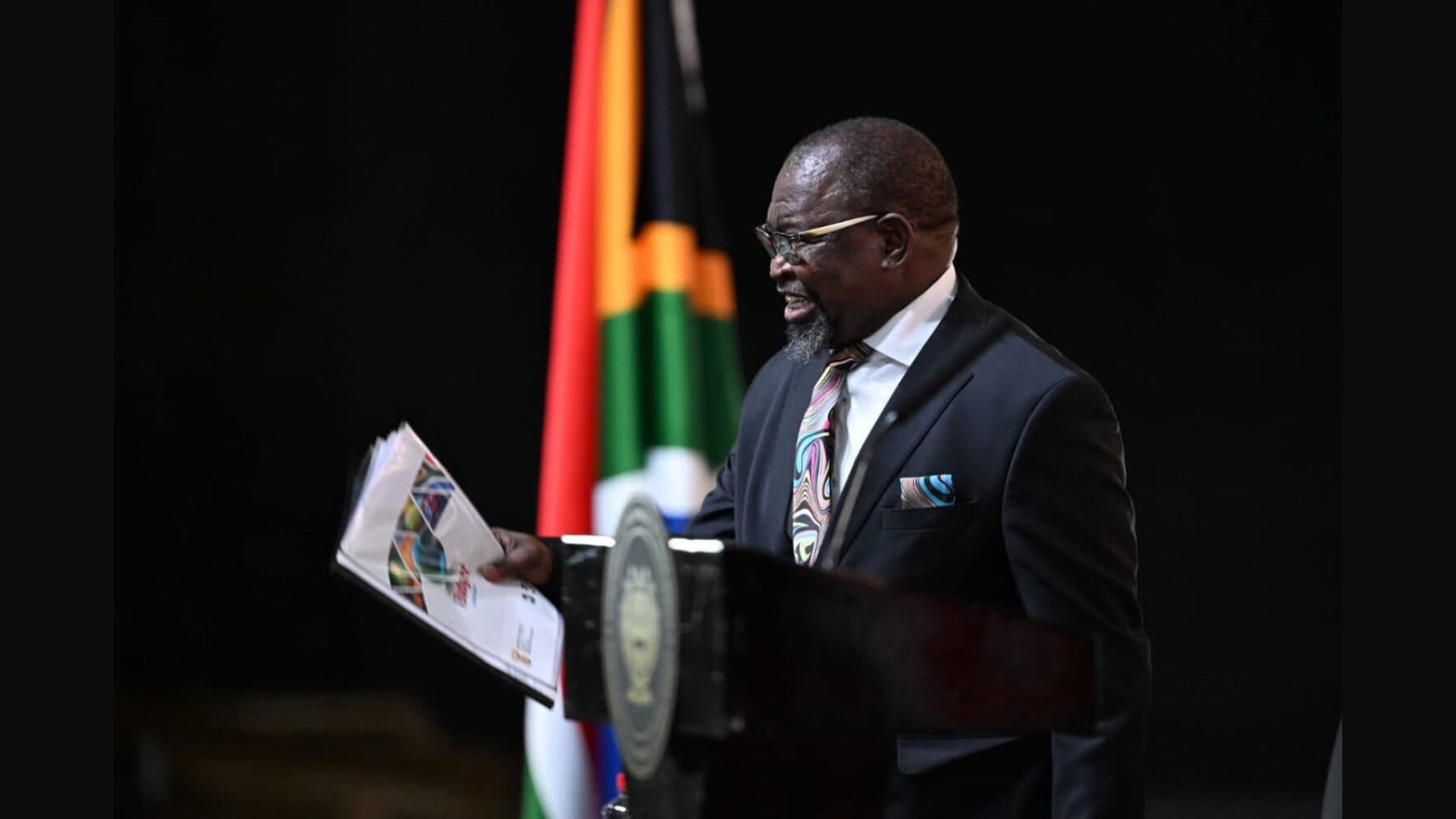
The 12 March 2025 Budget Speech sets out proposals to keep the national debt in check and increase necessary spending on social security and infrastructure, while more far-reaching fiscal and economic reforms are negotiated in the Government of National Unity (GNU).
As the Minister of Finance, Enoch Godongwana, pointed out in his budget speech: “There has been unprecedented public debate about the difficult policy trade-offs we, as a nation, face. A vital debate about which policies to fund and how to fund them”.
Given that the budget has not received full support from all parties in the GNU, the uncertainty is not over, and much will happen over the next few weeks. However, these events are consistent with an increase in the exercising of checks and balances within the budget and broader legislative processes.
The mooted value-added tax increases and the lack of personal income tax relief in will weaken consumer spending, reduce household disposable income, and weigh on economic activity. This can be balanced by the focus on capital investment, which will create jobs, and drive economy.
There are proposals in the minister’s speech, which if grasped and effectively implemented with urgency, would greatly strengthen South Africa’s fiscal position and its ability to meet its social and economic needs.
- A spending review that ‘goes beyond mere cost-cutting measures’. South Africa struggles to sustainably balance its budget, not so much because it has a revenue problem, but because of high recurrent spending. “It is concerning that the minister can hold out the possibility that there is so much wasteful spending by government that a review could save the country a half percent VAT increase, next year” says BASA managing Director, Bongiwe Kunene. “It is as concerning that while tax increases are being implemented, government will continue with spending reviews and establish a committee to identify waste, inefficient and underperforming programmes, which we already know are there. There needs to be much more urgency, not more of the same. Government must do enough to avoid a further VAT increase next year.”
- The increased allocation to the South African Revenue Service (SARS) to broaden the tax base and improve the administrative efficiency of the revenue service is essential, as closing the tax compliance gap will significantly improve South Africa’s fiscal resources and help avoid budget cuts and tax hikes.
- Investment in infrastructure and the implementation of new regulations, which aim to make public-private partnerships (PPPs) easier, from 10 June 2025. South African banks and business have long made it clear that policy certainty and pragmatic regulations will unlock the investment needed to finance productive economic infrastructure, such as roads, ports and water infrastructure. The establishment of professionally managed, ring-fenced utilities for water and electricity will assist in ensuring that there can be adequate investment and maintenance of these services, which are essential to the survival of communities and small businesses.
- The easing of cost-of-living pressures and protecting vulnerable households, by providing above inflation social grant increases, expanding the basket of VAT zero-rated food items, and not increasing the fuel levy. However, social security is not enough to significantly improve living standards for the majority of South Africans. Government needs to relentlessly focus on facilitating inclusive economic growth, the only way to sustainably reduce unemployment, poverty and inequality.
- BASA looks forward to more detail about the proposed credit guarantee vehicle, with an initial focus on independent energy transmission. Credit guarantee vehicles can work, provided government also creates a conducive business environment for entrepreneurs and companies.
- Banks have been assisting National Treasury in its efforts to remove South Africa from the Financial Action Task Force (FATF) grey list of countries that have weaknesses in their capacity to fight financial crime. As the minister pointed out, combating financial crimes and corruption is essential to protecting the integrity of our economy. BASA’s cautious optimism that South Africa will be removed from the grey list timeously, is bolstered by the minister’s commitment to strengthening South Africa’s ability to detect and prosecute complex economic crimes.
Business partnerships with government and improvements in energy, logistics and combatting crime have done much to boost South Africa’s economic prospects. However, the current heightened geopolitical uncertainty and strain in the global economy makes it essential that South Africa strengthen its fiscal position and the economy, so that it can meet the needs of its people, and cushion against any external shocks. The times call for urgency, action and pragmatism. As the budget is considered in Parliament, parties will have to put aside their differences and meaningfully co-operate in the interests of all South Africans.